The Ultimate Guide to Building an Outdoor Kitchen
September 25, 2025

September 25, 2025

Be the ultimate host with a gorgeous, functional outdoor kitchen.
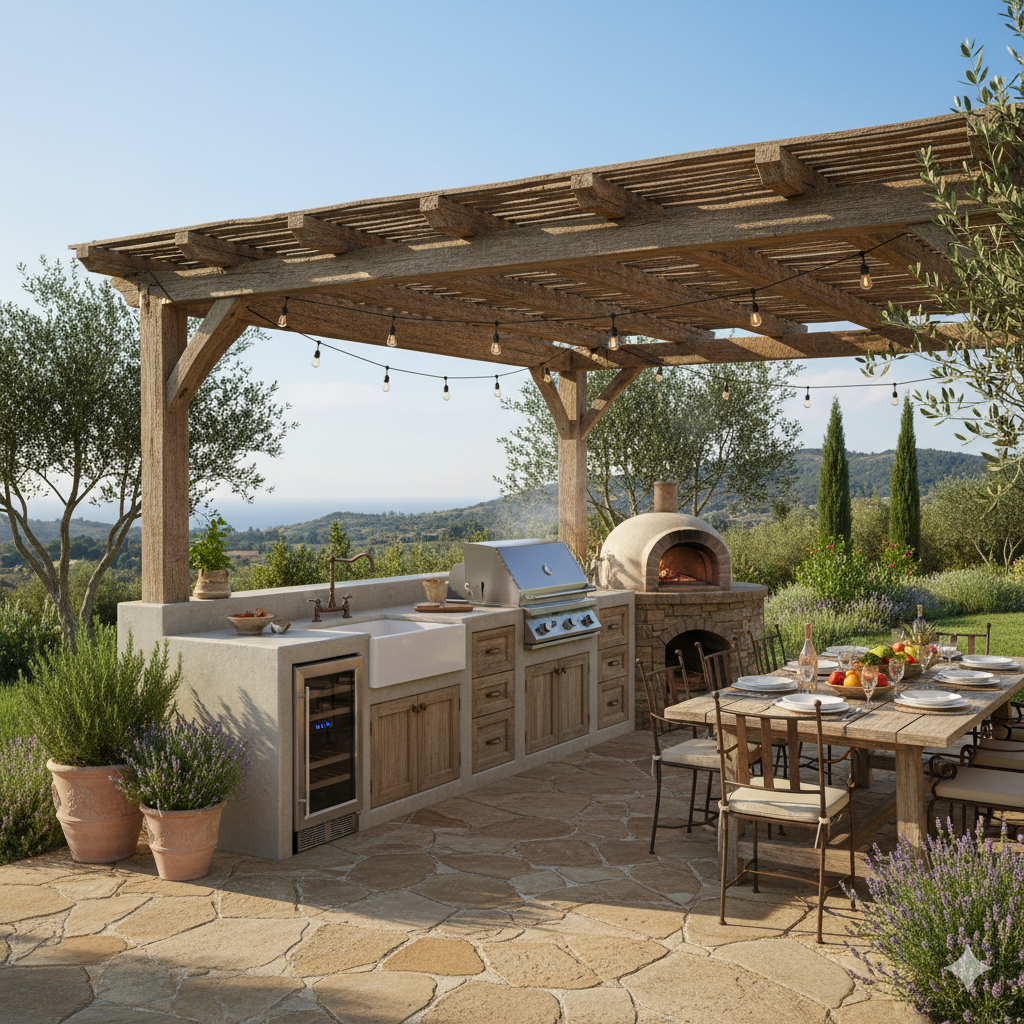
Outdoor kitchen with a grill, pizza oven, and dining table under a pergola, with a scenic view.

The Ultimate Guide to Building an Outdoor Kitchen
In today's fast-paced world, the backyard is no longer just a patch of grass—it's an extension of your home, a sanctuary for relaxation, entertainment, and culinary adventures. For luxury homeowners, an outdoor kitchen represents the pinnacle of sophisticated living, blending functionality with elegance to create a seamless outdoor oasis. Whether you're dreaming of sunset barbecues or intimate al fresco dinners, building an outdoor kitchen can transform your property into a year-round retreat. In this guide, we'll walk you through the planning process, highlight essential features, and explore how this addition elevates backyard living. As a residential construction company specializing in custom home builds, remodeling, and luxury additions, we've helped countless clients bring their visions to life—let's dive in.

Step 1: The Planning Process
Building an outdoor kitchen starts with thoughtful planning to ensure it aligns with your lifestyle, budget, and property. Rushing into construction without a solid foundation can lead to costly revisions, so take the time to map out every detail.

Assess Your Space and Needs
Begin by evaluating your backyard's layout. Consider the available square footage, proximity to your indoor kitchen (for easy access to utilities), and natural elements like sunlight, wind patterns, and views. For luxury setups, aim for a design that integrates seamlessly with your home's architecture—think flowing transitions from indoor to outdoor spaces. 

Ask yourself: How often will you entertain? Do you prefer casual grilling or gourmet cooking? Families might prioritize kid-friendly zones, while avid hosts could focus on bar areas for cocktails.

Set a Realistic Budget
Outdoor kitchens can range from $10,000 for basic setups to over $100,000 for high-end luxury versions. Factor in costs for materials, appliances, labor, and unexpected expenses like plumbing or electrical upgrades. In 2025, with the global outdoor kitchen market projected to grow at 8.9% annually, investing in quality pays off in longevity and home value. 

Pro tip: Allocate 20-30% of your budget for appliances and another 20% for custom features like built-in pizza ovens.Design and Layout ConsiderationsWork with a professional designer to create a functional layout. Popular trends for 2025 emphasize simplicity, bold colors, and natural textures to create a modern, inviting space. 
Divide the area into zones: prep (with sinks and counters), cooking (grills and stovetops), dining (seating and tables), and lounging (fire pits or bars). Incorporate all-weather elements for year-round use, such as retractable awnings or heated flooring, to combat climate variability. 

Sustainability is key—opt for eco-friendly materials like recycled composites and energy-efficient appliances to appeal to environmentally conscious homeowners.

Navigate Permits and Utilities
Don't overlook local regulations. Most areas require permits for electrical, plumbing, and gas installations. Check zoning laws, especially if your kitchen includes structures like pergolas. Hiring a contractor experienced in luxury additions ensures compliance and avoids delays. Utility planning is crucial: Run water, gas, and electricity lines early to support features like refrigeration or lighting.

Essential Features for a Luxury Outdoor Kitchen
The heart of any outdoor kitchen lies in its features. Focus on high-quality, durable elements that blend form and function, turning your backyard into a chef's paradise.

Grills and Cooking Appliances
No outdoor kitchen is complete without a top-tier grill. Built-in gas or charcoal models offer precision control, while hybrid options combine both for versatility. For luxury flair, add a smoker, rotisserie, or wood-fired pizza oven. Trends lean toward "Outdoor Kitchen 2.0," with smart appliances that integrate app controls for remote monitoring. 

Choose weather-resistant stainless steel to withstand the elements.Seating and Dining AreasComfortable seating transforms cooking into a social event. Incorporate bar stools around an island for casual chats, or a full dining table for family meals. Materials like teak or wicker (updated for 2025 with modern weaves) provide durability and style. 

Enhance with cushioned loungers or built-in benches, ensuring ample space for 8-12 guests in luxury designs.Storage, Sinks, and RefrigerationPracticality meets luxury with ample storage. Weatherproof cabinets and drawers keep utensils dry, while a deep sink facilitates cleanup. Under-counter refrigerators or wine coolers keep beverages chilled without trips indoors. For a touch of opulence, include a kegerator or ice maker.Lighting, Heating, and ExtrasCurated lighting sets the mood—string lights, LED under-cabinet strips, or pathway illumination for safety and ambiance. 

Extend usability with infrared heaters or fire features. Trending add-ons include garden bars for mixology, edible gardens for fresh herbs, and copper water features for a serene backdrop. 

Low-maintenance plants and climate-resilient designs ensure your space thrives in any weather.How an Outdoor Kitchen Enhances Backyard LivingBeyond the practicalities, an outdoor kitchen redefines how you experience your home. It fosters connection, boosts property value, and promotes wellness in luxurious ways.Elevating Entertainment and Family TimeImagine hosting effortless gatherings where guests mingle around the grill, sipping drinks from your built-in bar. This setup encourages al fresco dining, turning ordinary meals into memorable events. 

For families, it creates opportunities for bonding—kids helping prep veggies from the edible garden or sharing stories by the fire pit.Increasing Home Value and AppealA well-designed outdoor kitchen can yield a strong return on investment, often adding 50-100% of its cost to your home's resale value. In 2025, buyers seek multifunctional spaces that blend indoor-outdoor living, making your property stand out in a competitive market.

Promoting Year-Round Enjoyment and Wellness
With features like covered areas and heating, your kitchen becomes a four-season haven. Relaxation spaces with plush seating and water features provide a spa-like escape. 

Integrating green roofs or climate-resilient elements supports sustainability, while the fresh air and natural surroundings enhance mental well-being. 

Ready to Build Your Dream Outdoor Kitchen?
Building an outdoor kitchen is more than a project—it's an investment in luxury living that pays dividends in joy and value. At Southern Family Home Builders, our team of experts specializes in crafting bespoke outdoor spaces tailored to your vision. From initial design to final touches, we're here to make the process seamless and stress-free. Contact us today for a consultation and let's turn your backyard into the ultimate entertaining hub. What's your favorite outdoor kitchen feature? Share in the comments below!

By 7074802861 December 12, 2025
Where to buy land in Northern Alabama for a new home?
Home renovation vs. new custom home: A blue Victorian house on the left, modern house with a pool on the right.
October 3, 2025
Renovation vs. New Custom Build: Which is Right for You? At Southern Family Home Builders, we’ve been crafting dream homes across the South for decades, and one of the most common questions we hear from clients is, “Should I renovate my existing home or build a new custom home from scratch?” It’s a big decision, with unique benefits and challenges for each path. To help you decide, we’re breaking down the pros and cons of renovation versus a new custom build, drawing on our expertise as a family-owned builder dedicated to quality, Southern charm, and personalized service. Renovation: Breathing New Life into Your Existing Home Renovating your current home can be a fantastic way to update your space while preserving its character and memories. Here’s what to consider: Pros of Renovation Cost Savings (Sometimes): Renovations can be less expensive than building a new home, especially if you’re updating specific areas like the kitchen, bathrooms, or adding an extension. Cosmetic updates, like new flooring or paint, are often budget-friendly. Faster Timeline: Depending on the scope, renovations typically take less time than a full custom build. A kitchen remodel might take a few months, compared to a year or more for a new home. Preserving Memories: If your home holds sentimental value—maybe it’s where you raised your family or celebrated milestones—renovation lets you stay in a familiar space while modernizing it. Location Retention: Love your neighborhood? Renovating means you don’t have to leave your community, schools, or favorite local spots. Cons of Renovation Hidden Costs: Older hom es often come with surprises, like outdated wiring, plumbing issues, or structural damage. These can inflate your budget unexpectedly. Design Limitations: You’re working within the existing footprint, which may restrict your ability to achieve your dream layout or incorporate modern features. Disruption: Living through a renovation (or moving out temporarily) can be stressful, with dust, noise, and contractors in your space. Energy Efficiency Challenges: Retrofitting an older home to meet modern energy standards can be costly and less effective than building new. Our Expertise : At Southern Family Home Builders, we approach renovations with the same care as our custom builds. Whether it’s transforming a dated ranch into an open-concept haven or adding a cozy sunroom, we work closely with you to maximize your home’s potential while keeping surprises to a minimum. New Custom Build: Designing Your Dream from the Ground Up Building a new custom home offers a blank canvas to create exactly what you envision. Here’s what you need to know:Pros of a New Custom BuildTotal Customization: From the floor plan to the finishes, a new build lets you design every detail to match your lifestyle. Want a sprawling Southern porch, a chef’s kitchen, or a home office with a view? The sky’s the limit. Energy Efficiency: New homes are built to modern standards, with advanced insulation, HVAC systems, and smart technology that reduce utility bills and environmental impact. Low Maintenance: Everything is brand new—think new plumbing, electrical, and roofing—so you’re less likely to face costly repairs in the near term. Future-Proofing: We can incorporate features like wider doorways, single-level layouts, or flexible spaces to accommodate aging-in-place or growing families. Cons of a New Custom Build Higher Upfront Costs: Building a custom home typically requires a larger initial investment than most renovations, especially when factoring in land, permits, and construction. Longer Timeline: Designing and building a home from scratch can take 12-18 months or more, depending on the complexity and size. Lot Selection Challenges: Finding the perfect lot in your desired area can be tricky, with considerations like zoning, utilities, and topography (check out our blog on Choosing the Right Lot for more tips!). Emotional Shift: Leaving a familiar home or neighborhood can be bittersweet, even if the new home is everything you’ve dreamed of. Our Approach : At Southern Family Home Builders, we make the custom build process seamless and personal. From helping you select the ideal lot to guiding you through design choices that reflect your Southern roots, we’re with you every step of the way. Our team prides itself on crafting homes that blend timeless craftsmanship with modern functionality. Which Path is Right for You? The decision comes down to your priorities, budget, and vision. Ask yourself:What’s driving your project? If you love your location but need more space or modern updates, a renovation might be ideal. If you’re craving a fully tailored home with no compromises, a custom build is the way to go. What’s your budget? Renovations can start small, but unexpected issues can add up. A new build has a higher upfront cost but offers long-term savings through efficiency and durability. How much time do you have? If you need a quick refresh, renovation is faster. If you’re planning for the long haul, a custom build is worth the wait. What’s your vision? If your current home’s layout or lot limits your dreams, a new build gives you freedom. If you’re attached to your home’s character, a renovation can enhance it. Let Southern Family Home Builders Guide You At Southern Family Home Builders, we’re passionate about turning your vision into reality, whether that means revitalizing your current home or building a new one from the ground up. As a family-owned company rooted in Southern values, we bring warmth, integrity, and expertise to every project. Ready to explore your options? Contact us today for a consultation, and let’s start building your future together!
Back of a large gray mansion with a pool, balcony, and lush trees.
October 3, 2025
Choosing the Right Lot: Factors to Consider Before Building Your Custom Home Building your dream custom home starts with one critical decision: choosing the right lot. The land you select will shape every aspect of your home, from its design and layout to its long-term value and livability. As a custom home building company with years of experience, we’ve guided countless clients through this process, and we’re here to share the key factors you should consider when picking the perfect lot for your custom home. 1. Location, Location, Location The old real estate adage holds true—location is paramount. Think about how the lot’s location aligns with your lifestyle and priorities: Proximity to Amenities: Are schools, grocery stores, healthcare facilities, and recreational areas nearby? A convenient location can enhance your quality of life. Commute and Accessibility: Consider how far the lot is from your workplace or key destinations. Check for access to major roads, public transit, or even walkability if that’s important to you. Neighborhood Vibe: Does the area match your vision? Whether you prefer a quiet rural setting, a bustling suburban community, or an urban oasis, ensure the neighborhood feels like home. Pro Tip: Visit the lot at different times of day to gauge traffic, noise levels, and the overall atmosphere. A peaceful morning might hide evening rush-hour noise! 2. Topography and Natural Features The physical characteristics of a lot play a huge role in the design and cost of your custom home:Slope and Elevation: Flat lots are often easier and less expensive to build on, while sloped lots may require additional grading or foundation work. However, a sloped lot can offer stunning views or unique design opportunities, like a walkout basement. Soil Quality: Soil composition affects foundation stability. Sandy or rocky soil may require specialized engineering, while clay-heavy soil can lead to drainage issues. A geotechnical survey can prevent costly surprises. Natural Features: Trees, streams, or rock formations can add character but may also restrict where you can build. Consider how these features align with your vision and local regulations. Our Expertise: At Southern Family Home Builders, we conduct thorough site evaluations to assess topography and soil conditions, ensuring your home’s foundation is solid and your design maximizes the lot’s natural beauty. 3. Zoning and Building Regulations E very lot comes with a set of rules that dictate what you can build. Understanding these restrictions upfront is critical: Zoning Laws: Check with the local municipality to confirm the lot is zoned for residential use and whether there are restrictions on home size, height, or style. Setbacks and Easements: Setbacks determine how far your home must be from property lines, while easements may reserve portions of the lot for utilities or public access. These can limit your usable space. HOA Rules: If the lot is in a planned community, review the homeowners’ association (HOA) guidelines for design standards, landscaping requirements, or other restrictions. Pro Tip: We recommend working with a builder who’s familiar with local regulations. Our team navigates zoning and permitting processes to ensure your project complies without delays. 4. Utilities and Infrastructure Access to utilities is a make-or-break factor for any lot: Water and Sewer: Confirm whether the lot connects to municipal water and sewer systems or requires a well and septic system. Private systems can add significant upfront and maintenance costs. Electricity and Gas: Ensure the lot has access to power lines and, if desired, natural gas. Remote lots may require costly extensions or alternative energy solutions like solar. Internet and Connectivity: In today’s world, reliable high-speed internet is a must. Rural lots may have limited options, so verify connectivity with providers. Our Approach: We coordinate with utility providers early in the planning process to confirm availability and budget for any necessary infrastructure upgrades. 5. Future Development and Resale Potential Think long-term when choosing your lot. The surrounding area can impact both your enjoyment and your home’s future value: Planned Developments: Research upcoming projects nearby, such as new subdivisions, commercial centers, or infrastructure changes. These could enhance or detract from your lot’s appeal. Resale Value: A lot in a desirable, growing area is more likely to hold or increase in value. Look for neighborhoods with strong market trends or unique features, like waterfront access or scenic views. Privacy and Views: Consider how neighboring properties or future construction might affect your privacy or obstruct your views. A lot with protected green space nearby can be a bonus. Pro Tip: Check with the local planning department or consult with a real estate expert to understand the area’s growth trajectory. 6. Budget Considerations The lot itself is just one part of the equation. Factor in additional costs that can vary by lot: Site Preparation: Clearing trees, grading land, or removing rocks can add thousands to your budget. Permits and Fees: Some lots require impact fees, environmental assessments, or special permits, depending on the location and regulations. Design Compatibility: A lot with unique challenges (e.g., steep slopes or flood zones) may require a more complex, costly home design. At Southern Family Home Builders, we provide transparent cost estimates, factoring in lot-specific expenses to keep your project on budget. 7. Emotional Connection Finally, don’t underestimate the “feel” of the lot. Walk the property, imagine your home there, and ask yourself:Does this lot inspire you? Can you picture your family living here for years to come? Does the setting align with your vision for your dream home? A lot that checks practical boxes but doesn’t spark joy may not be the right fit. Trust your instincts—this is where your story begins.Let Us Help You Find the Perfect LotChoosing the right lot is a blend of practical planning and personal vision. At Southern Family Home Builders, we’re more than builders—we’re partners in bringing your dream home to life. Our team can assist with lot evaluations, connect you with trusted real estate professionals, and design a home that maximizes your lot’s potential. Ready to take the first step? Contact us today to start your custom home journey!
Show More →